How Does a Touchpad Work with Sensors and Controls Full Guide
Published: 10 May 2026
Many people get frustrated when their touchpad feels slow or difficult to control during important work. I faced the same problem while editing long articles on my laptop every day. Once I learned how does a touchpad work, it became much easier to adjust the settings and improve performance.
The touchpad tracks finger movement through sensors placed under the surface. These sensors help the laptop understand where your finger moves and what action you want to perform.
In this article, we have covered how a touchpad works in a simple and clear way so you can understand it easily and use your laptop more effectively.
In this article, we explain how does a touchpad work in a simple, clear way so you can understand it and use your laptop better.
How Does a Touchpad Work Step-by-Step
Have you ever wondered what really happens when you move your finger on a touchpad and the cursor moves instantly on the screen? It looks simple, but many small processes work behind it.
Here is the list of how does a touchpad work.
- Touch Surface Activation
- Finger Contact Detection
- Electrical Signal Creation
- Signal Capture
- Position Tracking
- Movement Reading
- Data Conversion
- Cursor Response
- Tap Recognition
- Gesture Control
- System Processing
Let’s take a closer look at how does a touchpad work step by step so you can understand it in a simple and clear way.
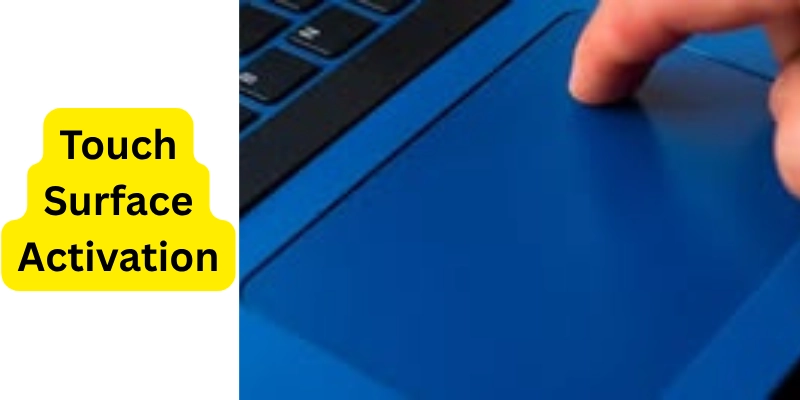
1. Touch Surface Activation
The touchpad turns on the moment your finger touches it. It remains ready to detect even the slightest movement on the surface. I notice it reacts instantly when I start working on my laptop. This step helps the system prepare for input. It makes the touch experience smooth and quick. It also supports everyday tasks without any delay. The response feels natural and fast during use.
- Activates on finger touch
- Prepares the system for input
- Detects light movement quickly
- Keeps the surface always responsive
- Supports smooth daily use
2. Finger Contact Detection
The touchpad senses when your finger makes contact with it. It identifies pressure and the exact touch point very quickly. I often see it respond even to a very soft touch. This step helps the laptop understand what action I want. It improves accuracy during scrolling and navigation. It also reduces mistakes while using the cursor. Everything feels more controlled and stable.
- Detects exact finger contact
- Reads pressure and position
- Responds to soft touches
- Improves the cursor accuracy level
- Reduces movement errors
3. Electrical Signal Creation
The touchpad creates small electrical signals when your finger moves. These signals carry information about direction, speed, and position. I find it interesting how tiny signals control all movement. The system uses these signals to understand user input. It converts touch into digital data instantly. This step helps the laptop process actions smoothly. It forms the base of touch response.
- Creates electrical movement signals
- Sends direction and speed data
- Converts touch into digital form
- Processes input instantly
- Supports smooth system response
4. Signal Capture
The touchpad captures signals the moment your finger moves on it. It reads tiny changes and sends them to the system. I notice this step works very fast when I scroll or drag items. It helps the laptop understand what action I want.
The hardware collects raw input without any delay. It ensures nothing gets missed during movement. This step lays the foundation for all subsequent processing. It keeps the input flow stable and continuous.
- Captures raw touch signals
- Sends data to the system instantly
- Detects movement without delay
- Supports real-time input flow
- Maintains stable signal transfer
5. Position Tracking
The touchpad tracks the exact position of your finger on the surface. It constantly updates the location as you move. I often see the cursor follow my finger smoothly. This step helps the system know where the pointer should go.
It improves accuracy during everyday use. It also supports precise control in small movements. The tracking stays active as long as you touch it. It ensures correct placement on screen.
- Tracks the exact finger location
- Updates position continuously
- Follows finger movement smoothly
- Improves the pointer accuracy level
- Maintains real-time tracking
6. Movement Reading
The touchpad reads how your finger moves across the surface. It detects speed, direction, and distance in real time. I feel it works very naturally when I swipe or drag. This step helps the system understand motion patterns.
It turns physical movement into usable input. It supports smooth navigation across applications. The reading stays accurate even during fast motion. It improves the user control experience.
- Reads finger movement patterns
- Detects speed and direction
- Converts motion into input
- Supports smooth navigation flow
- Maintains accurate movement sensing
7. Data Conversion
The touchpad converts all captured signals into digital data. The system then understands this data for processing actions. I find it amazing how simple touch becomes computer commands. This step helps connect hardware and software. It changes movement into readable instructions. It ensures the computer reacts correctly to every gesture. The conversion happens instantly without delay. It completes the input process.
- Converts signals into digital data
- Transforms touch into commands
- Connects hardware with software
- Processes input instantly
- Enables accurate system response
8. Cursor Response
The touchpad sends movement directly to the cursor on the screen. It reacts the moment I move my finger on the surface. I notice the pointer follows my direction without any delay. This step helps the system show real-time movement.
It makes navigation feel natural and easy. The cursor updates its position instantly with every small change. It improves daily computer use for work and browsing. The response stays consistent during all actions.
- Moves the cursor with finger motion
- Updates screen position instantly
- Reflects real-time navigation control
- Follows direction without delay
- Improves user movement experience
9. Tap Recognition
The touchpad detects a light tap as a click action. It understands the difference between touch and press. I use this feature daily when opening files or apps. This step removes the need for a physical mouse button. It improves speed during simple tasks. It responds quickly even to soft taps. The system records each tap as a command. It makes interaction more efficient.
- Detects a tap as a click action
- Separates touch and press input
- Opens files with a single tap
- Removes the need for a mouse click
- Improves task execution speed
10. Gesture Control
The touchpad understands multi-finger gestures for extra functions. It allows scrolling, zooming, and switching tasks easily. I often use two fingers to scroll pages quickly. This step adds more control without extra buttons. It increases productivity during work and study. It responds differently to each finger pattern. The system learns gesture patterns for better use. It makes navigation more flexible.
- Supports multi-finger gestures
- Enables fast page scrolling
- Allows zooming in and out
- Improves multitasking control level
- Enhances productivity during use
11. System Processing
The system processes all touchpad input inside the computer. It converts signals into final actions on screen. I see it work instantly when I switch apps or scroll. This step ensures everything runs in order. It connects hardware input with software output. It handles multiple actions at the same time. The processing stays fast and stable. It completes the touchpad working cycle.
- Processes all touchpad input
- Converts signals into actions
- Connects hardware with software
- Handles multiple tasks together
- Ensures stable system response
How Touchpad Sensors Detect Finger Movement
The touchpad uses smart sensors to understand every movement of your finger. It reads tiny changes on the surface and converts them into digital signals. I notice it reacts quickly even when I move my finger lightly. This process helps the laptop control the cursor with high accuracy. It works in real time to make navigation smooth and easy.
- The sensor layer detects: finger contact on the surface instantly and activates the internal sensing grid to start reading input without any delay.
- Electrical field changes: when the finger moves across the pad and disturbs the surface signals, allowing the system to measure touch presence clearly
- Signal collection system: gathers movement data continuously from multiple points on the touchpad to ensure full coverage of finger motion
- Position mapping unit: tracks exact finger location on the surface and updates coordinates in real time for precise cursor placement
- Motion direction reading: identifies swipe and slide path by analyzing how the finger shifts across different areas of the touchpad
- Speed measurement module: checks how fast the finger moves and adjusts the cursor speed to match the user’s control for better accuracy
- Data transmission process: sends signals to the system quickly and ensures smooth communication between hardware and software without interruption
- Cursor control output: converts data into screen movement and updates pointer position instantly for a responsive user experience
Why Touchpads Stop Working Sometimes
A touchpad can stop working for many different reasons. Sometimes it happens because of software issues, and sometimes due to hardware problems. I have seen cases where a simple setting change fixes the issue quickly. Understanding the real cause helps you solve the problem without confusion. It also makes laptop use more reliable in daily work.
- Driver issues occur: outdated or missing drivers prevent the touchpad from responding properly and stop communication between the hardware and the system.
- A system freeze happens: the operating system becomes unresponsive and blocks touchpad input until the system restarts or refreshes.
- Disabled settings exist: the touchpad gets turned off accidentally in settings or function keys, and stops reacting to finger movement.
- Hardware fault develops: internal touchpad parts get damaged or loose and fail to detect any finger contact on the surface.
- Software conflict arises: different programs interfere with touchpad control and reduce its ability to process movement correctly.
- Power-saving mode: the laptop reduces device activity to save battery and temporarily limits touchpad performance or disables it
- Dirt buildup blocks: dust or oil on the surface affects sensitivity and makes the touchpad less responsive to finger input
- Connection problem inside: an internal cable or connector becomes loose and breaks the proper signal flow between the touchpad and the motherboard.
Final Thought: How Does a Touchpad Work
Understanding how does a touchpad work makes it much easier to use your laptop with confidence. When you know how sensors, signals, and system processing work together, you can also fix small issues on your own.
I have personally noticed that this knowledge saves a lot of time during daily tasks. It also helps you avoid frustration when the touchpad slows down or stops responding. Now it’s your turn to apply what you learned and improve your laptop experience. If you found this guide helpful, start exploring your touchpad settings and make your work smoother.
FAQs: How Does a Touchpad Work
So guys, now let’s answer some frequently asked questions about how does a touchpad work to clear your remaining doubts in a simple way.
A touchpad is a built-in pointing device in laptops. It helps you move the cursor without using a mouse. It responds to finger movement on its surface. It makes laptop use easier and portable. It is placed below the keyboard for easy access. Most users rely on it for daily navigation.
Most modern laptops use capacitive sensing technology. It detects changes in electrical fields caused by your finger. These signals are sent to the system for processing. It ensures a fast and accurate response. This technology improves precision during use. It also supports multi-touch gestures easily.
A touchpad may stop working due to driver issues or settings. Sometimes it gets disabled accidentally. Hardware problems can also cause failure. Restarting or updating drivers often fixes it. External mouse settings can also interfere. Checking system settings usually solves the issue.
You can fix a slow touchpad by adjusting sensitivity settings. Updating drivers also improves performance. Cleaning the surface helps too. It often restores smooth movement. Background apps may also slow it down. Closing unused programs can improve speed.
It detects movement using sensors under the surface. These sensors read changes in electrical signals. The system converts them into motion data. This moves the cursor on the screen. It works continuously while you use it. Even small movements are detected accurately.
High sensitivity settings can cause this issue. It makes the cursor move with small touches. You can adjust it in settings. This improves control. It may also cause accidental clicks. Lowering sensitivity gives better stability.
This can happen due to sensitivity or hardware faults. Dirt on the surface may also trigger clicks. Sometimes software glitches cause it. Adjusting settings can fix it. Palm contact while typing may also trigger it. Cleaning and recalibration often help.
Multi-touch detects more than one finger at a time. It allows gestures like zooming and scrolling. The system reads multiple signals together. This improves usability. It supports advanced navigation features. It makes work faster and easier.
Touchpad settings control speed, gestures, and sensitivity. You can customize them easily. Windows provides full control options. It improves user experience. You can also enable or disable features. These settings help personalize usage.
No, the touchpad needs drivers to function properly. Drivers help the system understand input. Without them, it may not respond. Installing them fixes the issue. Generic drivers may offer limited function. Proper drivers ensure full features.




- Be Respectful
- Stay Relevant
- Stay Positive
- True Feedback
- Encourage Discussion
- Avoid Spamming
- No Fake News
- Don't Copy-Paste
- No Personal Attacks
- Be Respectful
- Stay Relevant
- Stay Positive
- True Feedback
- Encourage Discussion
- Avoid Spamming
- No Fake News
- Don't Copy-Paste
- No Personal Attacks
