How Does a Trackball Mouse Work A Complete Easy Explanation
Published: 30 May 2026
If your hand feels tired after using a normal mouse for long hours, you may start wondering how does a trackball mouse work and why so many people are switching to it. It looks unusual at first because the device does not move on the desk, yet the cursor still responds smoothly on the screen. Instead of sliding the whole mouse, you control a small built-in ball with your fingers, and the movement gets converted into on-screen motion through internal sensors.
This different way of working often surprises new users and makes them curious about its real mechanism and benefits. In this article, we have covered how this device works and what makes it different from a traditional mouse.
So guys, stay with me as we break down how does a trackball mouse work and what makes it different from a traditional mouse in simple terms.
How Does a Trackball Mouse Work Step-by-Step
A trackball mouse works in a way that feels different the first time you use it. Instead of moving the whole device, you control a small ball with your fingers to move the cursor on the screen. Many users get curious because the mouse stays in one place but still responds instantly. This simple system makes it easier to work in tight spaces and reduces hand movement during long use.
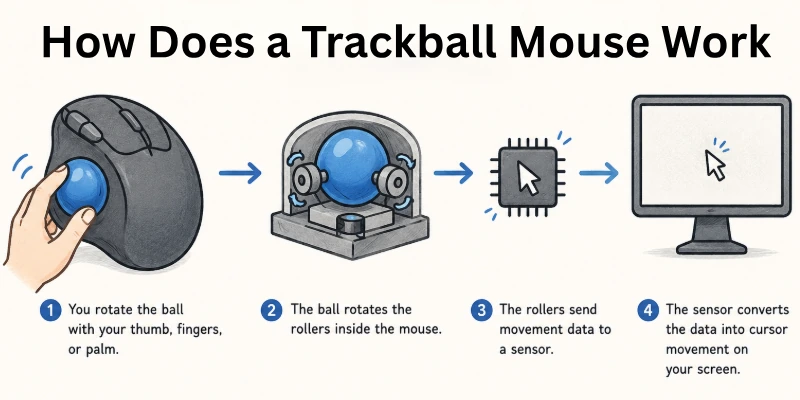
Here is the list of how does a trackball mouse work.
- Trackball Mouse Structure Overview
- Built-in Ball Movement System
- Finger Control Technique
- Internal Sensor Function
- Cursor Signal Conversion
- Motion Detection Process
- Role of Rollers in Tracking
- Optical Tracking Method
- Direction Control System
- Speed Sensitivity Adjustment
- Cursor Accuracy Mechanism
- Surface Stability Advantage
- User Input Response Flow
- Real-Time Movement Output
Let’s take a closer look at how does a trackball mouse work.
1. Trackball Mouse Structure Overview
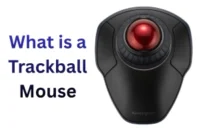
A trackball mouse uses a fixed body that stays still on your desk. The main ball sits inside a secure socket that allows smooth rotation. You control the ball while the device itself does not move. Small internal parts hold the ball in place and guide its motion. These parts connect directly to the tracking system inside. The structure helps you work without shifting your hand position. It gives stable control during daily computer use.
- A fixed body prevents desk movement
- A built-in socket holds the ball securely
- A compact frame supports steady use
- Internal layout guides smooth motion
2. Built-in Ball Movement System
The built-in ball acts as the main input tool of the mouse. You rotate it with your thumb or fingers in different directions. The ball rolls inside its housing without leaving the base. Tiny mechanical parts capture every small turn. These movements are sent to the tracking unit for processing. The system reacts quickly to even light touches. It allows smooth control without dragging the mouse.
- Rotating the ball controls the pointer direction
- Finger spin replaces full hand movement
- Internal rollers capture ball rotation
- Light touch creates instant response
3. Finger Control Technique
Finger control makes the trackball easy to operate over time. You move the ball using gentle pressure from your fingertips. Small finger shifts can move the cursor across the screen. You can slow down or speed up movement with control. The hand stays relaxed because it does not travel. This method helps during long working hours. It feels more stable compared to traditional dragging.
- Fingertip motion replaces arm sliding
- Small pushes adjust the pointer path
- The grip stays relaxed during use
- Control improves with practice time
4. Internal Sensor Function
Internal sensors read the movement of the trackball. They detect direction, speed, and rotation patterns. The system converts physical movement into digital signals. These signals are sent to the computer instantly. The cursor then moves based on this data. Sensors react even to tiny changes in motion. This helps maintain smooth tracking during detailed work.
- Sensors read ball rotation data
- Direction signals sent to the system
- Speed changes tracked in real time
- Small motion converted into input
5. Cursor Signal Conversion
The trackball mouse changes physical movement into digital instructions. When you rotate the ball, the system captures that motion instantly. It does not send movement as a raw action. Instead, it converts it into coded signals that the computer can read. These signals travel through the internal circuit without interruption. The cursor then responds based on this converted data. This process helps you control the screen with precision and stability.
- Movement turns into digital instructions
- The system converts motion into readable data
- Signals travel through the internal circuit
- The cursor reacts to processed input
- A stable response improves control flow
6. Motion Detection Process
The motion detection system focuses on how the ball is moving at every moment. It studies the direction you push the ball. It also measures how fast or slow you move it. Even small finger changes get detected quickly. The system keeps updating this information continuously. It then sends updated movement data for processing. This keeps the cursor behavior consistent on screen.
- Detects direction of ball movement
- Measures the speed of finger input
- Captures even small motion changes
- Continuously updates movement readings
- Sends live data for processing
7. Role of Rollers in Tracking
Rollers inside the device support smooth movement while reading from the ball. They touch the ball lightly and rotate as it moves. Each roller captures movement from a different angle. This helps the system understand full directional input. The rollers pass this information to internal processing parts. The cursor moves based on this mechanical reading. This setup improves accuracy during daily use.
- Rollers contact the ball surface directly
- Each roller reads in a different direction
- Converts rotation into mechanical input
- Sends movement data to the processor.
- Supports accurate directional tracking
8. Optical Tracking Method
The optical tracking method works without physical contact between parts. It uses light sensors to scan the movement of the ball. These sensors detect even small surface shifts. The system reads changes through reflected light signals. It then converts this into movement data. This method reduces wear and improves smooth performance. It reacts quickly when you move the ball.
- Uses light instead of contact parts
- Scans the ball’s surface for movement
- Detects tiny position changes instantly
- Converts light signals into data
- Improves smooth and fast response
9. Direction Control System
The direction control system decides where the cursor moves on the screen. You guide the trackball in different directions using your fingers. The system reads every change in ball direction. It then matches that direction with on-screen movement. You can move the cursor left, right, up, or down easily. This control feels natural after some practice. It helps you handle precise tasks with less effort.
- Finger direction guides the cursor path
- The system reads directional changes instantly
- Supports multi-angle pointer movement
- Smooth navigation across screen areas
- Improves control in detailed tasks
10. Speed Sensitivity Adjustment
Speed sensitivity adjustment controls how fast the cursor moves. When you move the ball slowly, the cursor moves gently. When you move it quickly, the cursor travels faster across the screen. The system responds based on how much pressure you apply. You can adjust your style for comfort. This feature helps you match different work needs. It makes daily use more flexible.
- Slow motion gives fine control
- Fast movement increases cursor speed
- Pressure affects pointer responsiveness
- Adjustable settings match user comfort
- Flexible control for different tasks
11. Cursor Accuracy Mechanism
The accuracy mechanism ensures the cursor reaches the exact point you want. It tracks even the smallest finger movements on the ball. The system processes these inputs carefully before moving the cursor. This reduces mistakes during detailed work. You get better control in editing or design tasks. The response stays consistent on every use. It improves precision during long sessions.
- Detects small finger adjustments precisely
- Reduces pointer positioning errors
- Processes input before cursor movement
- Supports detailed design tasks easily
- Maintains a consistent accuracy level
12. Surface Stability Advantage
The surface stability advantage comes from the fixed design of the trackball mouse. The device does not move while you work. Only the ball moves under your fingers. This keeps your hand steady on the desk. You do not need to slide the mouse around. It works well in small or crowded spaces. This stability helps reduce unnecessary hand movement.
- The fixed base stays completely still
- Only the ball moves during use
- No desk sliding required
- Saves space on the workspace surface
- Reduces overall hand movement
13. User Input Response Flow
When you use a trackball mouse, everything starts with your hand movement. You guide the ball with your fingers to give a command. The device picks up this action right away. It understands what you are trying to do based on direction and speed. Then it prepares how the pointer should react on the screen. You feel a smooth connection between your hand and the screen. This makes everyday work feel more direct and easier.
- Finger movement starts cursor action
- The device reads hand direction quickly
- Ball control replaces full mouse motion
- Quick interpretation of user action
- Smooth link between the hand screen
14. Real-Time Movement Output
As you move the ball, the cursor reacts on the screen without waiting. Every small finger shift appears instantly on display. The movement stays continuous while you work. You do not feel any pause or delay during use. The pointer follows your motion closely and smoothly. This helps you stay focused on your task. It creates a natural and fast-working experience.
- The cursor reacts instantly on the screen
- Small finger shifts show immediately
- Continuous smooth pointer movement flow
- No delay during working action
- A fast response improves working focus
Best Use Cases for a Trackball Mouse
A trackball mouse fits well in many real work situations where control and comfort matter more than fast hand movement. It helps users work in small spaces and reduces the need to move the whole device. Many people choose it for tasks that need steady and careful cursor control. You can easily adapt it to different daily computer activities.
- Office Work: You can handle daily documents, emails, and spreadsheets with steady cursor control, which helps you stay productive without constantly moving your hand across the desk.
- Graphic Design: You can work on detailed editing, image adjustments, and fine design tasks where small and precise cursor movements are more important than speed.
- Coding Tasks: You can navigate long lines of code, switch between files, and manage editing tasks smoothly with less hand movement and better focus.
- Small Desk Setup: You can easily use it in tight workspaces where a normal mouse feels uncomfortable because it stays fixed in one place while you work.
- Long Working Hours: You can reduce wrist strain during extended computer use since your fingers do most of the movement instead of your whole arm.
- Travel Use: You can carry it easily and use it on small surfaces like laptops or travel desks, making it practical for work on the go.
- Accessibility Needs: You can support limited wrist or arm movement, allowing users to control the cursor comfortably with minimal physical effort.
Tips to Improve Trackball Mouse Performance
A trackball mouse works best when you use it with the right habits and settings. Small adjustments in how you handle the ball can improve speed and accuracy. Many users do not realize that simple care and practice can make a big difference. You can get smoother control and better comfort with a few easy tips.
- Clean Regularly: You should clean the trackball and the surrounding area often to remove dust and dirt that can slow down movement and affect smooth cursor control.
- Adjust Sensitivity: You can change pointer speed settings on your device to match your working style for better control and faster response.
- Use Fingertips: You should control the ball with light fingertip movements instead of hard pressure to improve accuracy and reduce hand strain.
- Practice Control: You can practice small movements daily to build better control and make cursor handling more natural over time.
- Check the surface: You should keep the mouse on a stable and clean surface so it stays steady and performs without interruption.
- Avoid Dirt Build-up: You can prevent tracking issues by removing any debris that collects around the ball and internal rollers.
- Update Settings: You should review your system settings sometimes to ensure smooth performance and match your current usage needs.
Conclusion
In this guide, we have covered how does a trackball mouse work. I personally recommend it for users who work long hours on a computer and need a stable and easy control option. It can really improve your working comfort.
It also supports better focus during detailed tasks. You may feel less strain on your wrist over time. Thank you for staying with this guide. Wishing you all the best and goodbye for now. Don’t skip the next part of the FAQs. I hope you will find something more interesting, so don’t miss it. If you miss it, you may lose something new.
FAQs: How Does a Trackball Mouse Work
Let’s explore some common questions about how does a trackball mouse work in simple words.
A trackball mouse can be better for users who want less wrist movement. It stays fixed, so you do not need to drag it around. Many people prefer it for long working hours. It depends on personal comfort and usage style.
The main parts include the ball, sensors, and internal rollers. These parts work together to track movement. The ball is the main control element. Sensors convert motion into digital signals. Internal rollers help detect direction and improve accuracy.
It is a type of trackball mouse controlled by the thumb. The ball is placed on the side of the device. Thumb movement controls the cursor. It is popular for ergonomic use. Many users prefer it because it reduces wrist movement and feels more comfortable during long work sessions.
A slow response may happen due to dirt or low sensitivity settings. Cleaning the ball often fixes it. Adjusting speed settings also helps. Hardware condition matters too. You may also notice slow movement if the rollers inside are dusty or not moving freely, so regular cleaning keeps performance smooth.
It reduces wrist movement and improves comfort. It works well in a limited space. It offers better precision for detailed tasks. Many users find it ergonomic. It also helps users stay productive during long working hours without feeling hand fatigue.
Yes, it can improve productivity for many users. It reduces hand movement and saves time in tight spaces. It also supports precise work. Many professionals prefer it for daily tasks. It helps users stay focused for longer periods without frequent hand adjustments.
It is ideal for office workers and designers. People with wrist pain also benefit from it. It works well in small desk spaces. It is useful for precision-based tasks. Many users who work long hours on a computer prefer it because it reduces hand movement and improves comfort.
Optical trackball technology uses light sensors instead of mechanical parts. It detects movement by scanning the ball’s surface. This reduces wear and improves smooth tracking. It gives accurate cursor control. It also helps the device last longer with less maintenance and fewer mechanical issues over time.

- Be Respectful
- Stay Relevant
- Stay Positive
- True Feedback
- Encourage Discussion
- Avoid Spamming
- No Fake News
- Don't Copy-Paste
- No Personal Attacks
- Be Respectful
- Stay Relevant
- Stay Positive
- True Feedback
- Encourage Discussion
- Avoid Spamming
- No Fake News
- Don't Copy-Paste
- No Personal Attacks
